Choosing the Right Product Development Outsourcer for Success

Table of Contents
So, what exactly is a product development outsourcer? Think of them as an expert extension of your own team. They're an external partner who can manage part or all of your product’s journey, from the first sketch on a napkin to launch day and all the updates that follow.
This kind of partnership lets you bring in specialized skills, get your product to market faster, and keep a tight rein on costs—all without the overhead of hiring more full-time staff. It’s a strategic play to gain a competitive edge by moving quicker and smarter than everyone else.
Why Outsourcing Product Development Is a Smart Move
When people hear "outsourcing," they usually jump straight to cost-cutting. And sure, saving money is a nice perk, but that’s not the whole story. The real win is thinking of outsourcing as a way to actively grow your business, not just as a last-resort fix. It's about giving your company the firepower to hit goals that would otherwise be out of reach.
Let's be real: most in-house teams, especially at startups and growing companies, are already stretched thin focusing on the core business. They only have so many hours in the day. When a big, ambitious product idea runs into that wall, progress grinds to a halt. This is precisely where an external partner can completely change the game.
Unlocking Speed and Specialized Skills
Picture a fintech startup with a brilliant idea for an AI-powered fraud detection feature in their new mobile app. Their in-house team is fantastic at building the core banking functions, but they don't have deep machine learning expertise. Trying to hire a full-time AI team from scratch would be a slow, expensive process, pushing their launch back by months.
This is the perfect scenario to bring in a product development outsourcer that lives and breathes AI. By doing so, the startup can immediately:
- Hit the Accelerator: They get an entire team of experts, ready to go on day one, who can build and plug in the new feature while the in-house team keeps working. That aggressive launch date suddenly looks a lot more realistic.
- Get a Tech Upgrade: They can build with sophisticated technology without the massive R&D investment or the painful learning curve.
- Keep the Main Thing the Main Thing: Their own engineers are freed up to keep improving the main app and taking care of their current users.
This example really gets to the heart of what smart outsourcing is all about. It’s not just about delegating tasks; it’s about strategically injecting expert skills right where you need them, exactly when you need them.
Businesses are increasingly turning to outsourced partners to speed up development, control costs, and tap into high-level skills for things like AI, blockchain, and IoT. Instead of building everything from scratch, they partner with specialized firms to handle the entire product lifecycle—from design and coding to testing and launch.
This shift turns your development from a slow, step-by-step process into a dynamic, parallel operation that moves at high speed. You can explore our complete guide on outsourced product development to see how different models can fit what you're trying to build. When you change how you think about the "why," you realize that finding the right partner isn't just about plugging a hole—it's about grabbing a major strategic advantage.
In-House vs Outsourced Development At a Glance
Here's a quick comparison of the key differences between building an in-house team and hiring an external partner for your product development.
| Factor | In-House Team | Outsourced Partner |
|---|---|---|
| Cost | High upfront & ongoing (salaries, benefits, office) | Lower upfront, predictable project-based costs |
| Speed to Start | Slow (hiring, onboarding can take months) | Fast (teams are pre-vetted and ready to go) |
| Expertise | Limited to the skills of who you can hire | Access to a wide pool of specialized talent |
| Scalability | Difficult to scale up or down quickly | Flexible; easily adjust team size to project needs |
| Management | Full control, but high management overhead | Shared control, less day-to-day management burden |
| Focus | Can divert focus from core business activities | Allows your core team to stay focused |
Ultimately, the choice depends on your company's immediate needs, long-term goals, and available resources. Neither path is universally better, but understanding these trade-offs is the first step to making the right decision for your product.
Preparing Your Project for a Successful Handoff

Before you even think about interviewing a single outsourcing firm, the most critical work happens inside your own walls. I've seen it time and time again: companies rush into a partnership without a solid plan, and the results are almost always messy, over-budget, and a far cry from the original vision.
Think of this internal prep work as your foundation. Get it right, and your new partner can hit the ground running, adding value from day one. Get it wrong, and you're setting everyone up for failure.
Define Your Project Scope with Precision
"We need a mobile app." That's not a scope; it's a wish. A vague scope is probably the single biggest project-killer I've encountered. You have to dig much, much deeper.
What problem, specifically, are you trying to solve? Who are you solving it for? What are the absolute, non-negotiable features for your first release, your Minimum Viable Product (MVP)?
Let's get practical. Instead of a fuzzy idea, a well-defined scope sounds more like this:
- Objective: Develop an iOS app for our existing subscribers so they can track their order status and delivery times without calling customer support.
- Must-Have Feature 1: Secure login using their current website credentials.
- Must-Have Feature 2: A clean dashboard listing all current and past orders.
- Must-Have Feature 3: Real-time push notifications for "shipped" and "out for delivery" status updates.
See the difference? This kind of detail gives a potential partner a crystal-clear target. It turns a vague concept into a concrete, actionable plan.
Your project documentation should be so clear that someone with zero prior knowledge of your company could read it and immediately grasp the project's purpose and core functionality. If it passes that test, you're in a good spot.
This isn't just about being organized. This level of clarity is your best defense against scope creep, blown budgets, and the endless, soul-crushing meetings that drain all momentum from a project.
Establish KPIs That Truly Matter
How do you know if you've actually succeeded? It sounds like a simple question, but the answer needs real thought. It’s easy to get distracted by vanity metrics that look good on a chart but don't move the needle for the business.
Your Key Performance Indicators (KPIs) must be tied directly to tangible business goals. For a partnership to work, both you and the outsourced team need a shared understanding of what "done" and "successful" actually mean.
Here’s what this looks like for a new e-commerce app:
| Business Goal | Corresponding KPI | Success Target |
|---|---|---|
| Improve customer loyalty | 25% of app users make another purchase within 30 days | Exceed 25% |
| Lower support costs | Reduce "Where is my order?" support tickets by 40% | Achieve a 40% reduction |
| Confirm market demand | Reach 1,000 daily active users within the first 90 days | Hit the 1k DAU mark |
When you set these targets before the work begins, you align everyone from the start. Your outsourced team knows exactly what business outcomes they are responsible for, and you have an objective way to measure their impact. This is the bedrock of a healthy, results-focused partnership.
How to Vet and Evaluate Potential Partners
Finding the right partner is hands down the most important call you'll make. This is where you move past the slick sales pitches and glossy brochures to figure out who can actually deliver. A great product development partner should feel like a true extension of your team, not just another vendor on the payroll.
That means you have to get your hands dirty. You’re looking for a combination of serious technical chops, a solid track record in your industry, and—this is the big one—a culture that just clicks with yours.
Look Beyond the Portfolio
Every agency will show you their highlight reel. Your job is to peek behind the curtain and understand the how and the why of their past projects. A beautiful user interface is great, but it tells you nothing about whether the project was a nightmare to manage, went way over budget, or if the code underneath is a tangled mess.
When you're digging into their case studies, don't be afraid to ask the tough questions. You're trying to get a feel for their real-world performance.
- Complexity Match: Does their past work actually mirror the technical challenges of your project? If you need a sophisticated fintech platform, a portfolio filled with simple brochure websites should be a red flag.
- Problem-Solving: This is my favorite one. Ask them to walk you through a project that hit a major snag. How did they deal with scope creep, an unexpected technical roadblock, or a demanding client? Their answer here is far more telling than any success story.
- Client Longevity: Do they have clients who stick around for years and bring them repeat business? That's a powerful signal of client satisfaction and reliability.
These kinds of questions shift the focus from what they built to how they build. That’s a much better way to predict how your own project will go.
Scrutinize Their Process and Tools
The way a team operates day-to-day will have a direct impact on your project's success. You need to be sure their development methodology and communication habits are compatible with your own. If they aren't, you're signing up for constant friction and delays.
Don’t just check a box and ask if they use Agile. Get specific. Ask them to describe a typical two-week sprint for a project like yours. Who runs the stand-ups? How do they manage the backlog? What does sprint planning look like? The details are everything.
A transparent workflow is the foundation of trust and momentum. Having a clear, shared process means everyone knows what’s happening and what’s next.
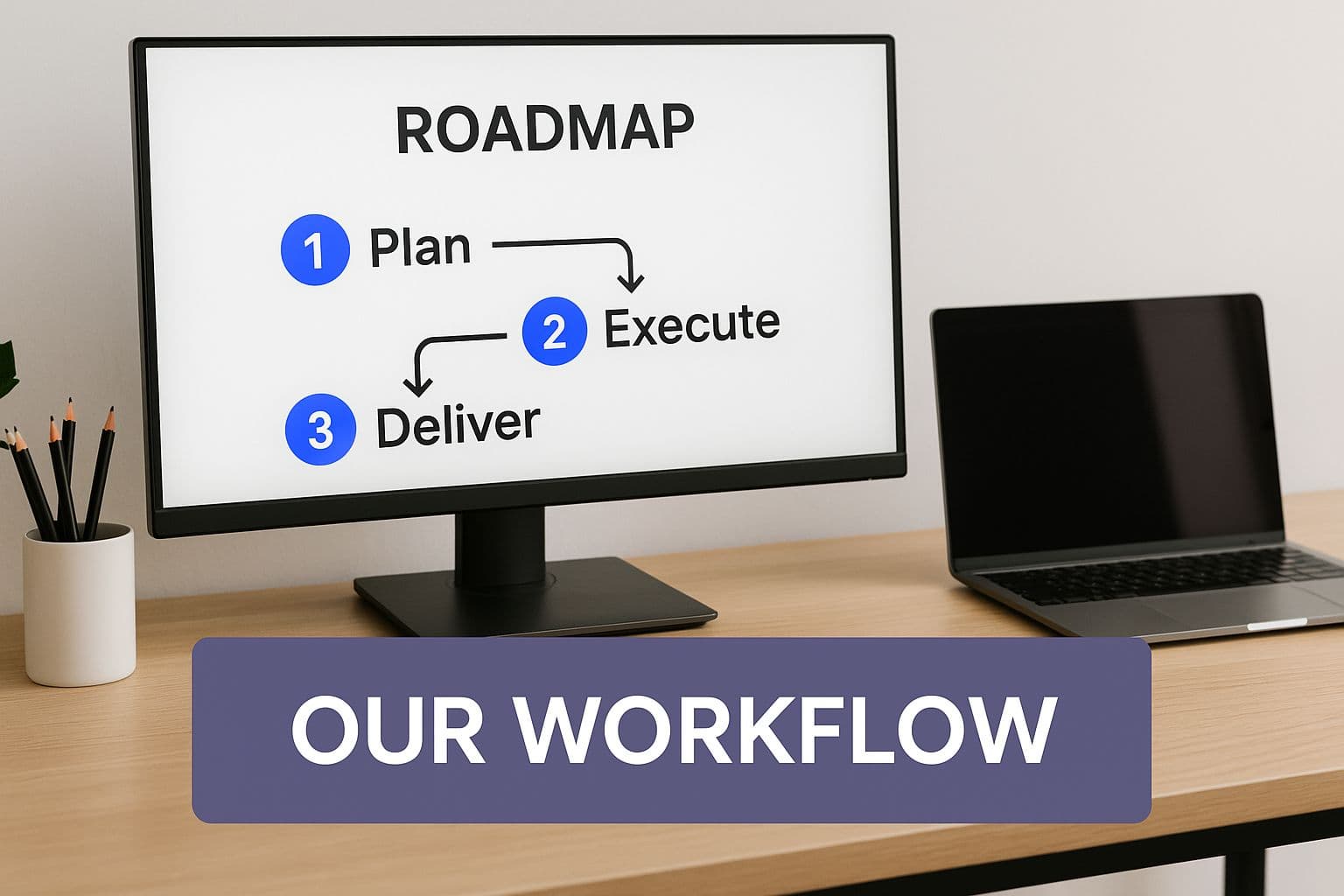
This kind of visual roadmap is incredibly helpful because it ensures both teams are aligned on the journey from initial discovery all the way to launch.
Finally, take a close look at the tools they use every single day. Do they live in Jira, Asana, or something else for project management? Are they a Slack or a Microsoft Teams shop? You need seamless integration, not a clunky new software stack your team has to learn on the fly.
And don't forget security. It's non-negotiable. Ask about their protocols for data protection, access controls, and how they handle sensitive information. A professional product development outsourcer will have clear, documented answers, showing they take a secure and organized partnership seriously.
Crafting a Contract and Governance That Protects You
Let's be honest, a handshake and a good vibe won't get you through a complex product build. When you bring on a product development outsourcer, your best friends are a rock-solid contract and a practical governance plan. This isn't about mistrust; it's about setting clear expectations from the start and building a framework to handle the curveballs that every project throws.
Think of it as the detailed blueprint for your working relationship. At the core of this is a well-defined Statement of Work (SOW). This document takes you from vague promises to concrete specifics, heading off those "I thought you meant..." conversations before they can even start.
Key Components of a Bulletproof SOW
A strong SOW leaves no room for interpretation. It’s your single source of truth, making sure everyone is on the same page about what success looks like.
Here are the absolute essentials I insist on:
- Intellectual Property Rights: Make it painfully clear who owns the code, designs, and anything else created once the invoices are paid. This should be explicitly stated: "You own 100% of the IP." No ambiguity.
- Data Security Standards: How will your partner handle sensitive data? You need to define the required security protocols, especially if you're dealing with customer information. If you need to meet standards like SOC 2 or HIPAA, spell them out.
- Payment Milestones: Never agree to vague payment schedules. Tie every single payment to a tangible, verifiable deliverable. For example, a payment is released upon the successful deployment of the user authentication feature, not just after a month of work.
- A Clear Exit Clause: It's the pre-nup of the business world. No one likes to plan for a breakup, but you have to. Detail the process for terminating the contract, including how the project gets handed over and what final payments are due.
A strong contract isn't about a lack of trust; it's what makes trust possible. When everyone knows the rules of the game and what happens when things go sideways, you can focus on building something great together.
This level of detail ensures both your team and your new partner are perfectly aligned on the what, when, and how of every delivery.
Building a Practical Governance Framework
The contract is the "what," but the governance framework is the "how." This is your operational playbook for the day-to-day rhythm of the partnership. It answers the simple, yet critical, questions about how your teams will actually collaborate.
Your framework should define:
- Roles and Responsibilities: Who is the main point of contact on each side? Who is the ultimate decision-maker for scope changes or design approvals?
- Communication Cadence: Set a predictable schedule for your interactions. This could mean daily stand-ups via Slack, weekly video calls for progress reviews, and maybe monthly meetings for high-level strategy.
- Tools and Systems: Decide on a single source of truth for everything. Will you use Jira for tasks, Slack for communication, and GitHub for code? Get everyone on the same platform from day one.
- Escalation Paths: When a problem pops up that the core team can't solve, what's the next step? Define who gets pulled in and at what point, so small issues don't fester.
Thinking through this upfront is especially vital when you’re planning your first release. If you're starting small, you can learn more about what is a minimum viable product in our guide. Aligning your contract and governance with your MVP goals is a recipe for a much smoother launch.
Mastering the Onboarding for a Seamless Kickoff

You’ve signed the contract and shaken hands on the partnership. A lot of people think the hard part is over, but in my experience, this is where the real work begins. The first 90 days with your new product development partner are absolutely critical. They set the tone for the entire relationship.
A clumsy start filled with miscommunication and delays can poison the well, creating friction that’s hard to overcome. But a well-executed, thoughtful onboarding process builds a powerful foundation of trust, shared purpose, and momentum right out of the gate.
The main goal here is simple: erase the line between "us" and "them." From this moment on, you're one team, working towards one goal. This takes deliberate, conscious effort, especially when you’re working across different time zones and cultures. You’re not just hiring a vendor; you’re building a unified team.
Integrating Teams and Systems
First things first, you need to get your new team members plugged into your workflow. This is more than just sending a few invites; it's about giving them the tools they need to contribute from day one, securely and efficiently.
Here’s a practical checklist to get started:
- Secure System Access: Grant access to the essentials. This means your codebase on GitHub, your project boards in Jira, and the design files in Figma. The key is to use role-based access so everyone has precisely the permissions they need—no more, no less.
- Communication Channels: Get everyone into your main communication hub, whether that's Slack or Microsoft Teams. I always recommend creating a dedicated project channel for daily stand-ups and general chatter, plus a separate, clearly marked channel for urgent alerts.
- Documentation Library: Make sure they have a key to your knowledge vault. A well-organized Confluence or Notion space with technical specs, user personas, and project roadmaps is invaluable.
A seamless onboarding isn't just about sending invites; it's about making your new partners feel like they belong from the moment they log in. The faster they can navigate your systems, the faster they can start delivering value.
Getting this initial setup right removes immediate friction and makes the new team feel like an extension of your own, not just a group of outsiders.
Running a Powerful Kickoff Meeting
The project kickoff meeting is your single most important ceremony. Don't treat it as a box-ticking exercise. This is your chance to move beyond the documents and forge a real human connection, aligning every single person on the mission ahead.
Your agenda needs to be sharp and focused. You're there to build clarity, set expectations, and establish a rhythm for how you'll communicate and work together. A great kickoff solidifies the core objectives, defines the timeline, and locks in the day-to-day collaboration processes.
If you’re building the first version of your product, it's a smart move to have this meeting mark the official start of your first development sprint. For those just getting started with this methodology, you can learn more about how to build an MVP and frame your kickoff around its specific goals.
This meeting isn't just a formality—it’s the official launch of your journey together. It’s where you cultivate that "one team" culture that is absolutely essential for a successful partnership with your product development outsourcer.
Got Questions About Outsourcing? You're Not Alone.
It’s completely normal to have a few nagging questions, even when you feel you’ve got a solid plan. Bringing on an outside product development partner is a big move. It’s a decision that touches your budget, your timeline, and the future of your product.
Let's tackle some of the most common concerns I hear from founders and product leaders. My goal here isn't to sugarcoat the process but to give you straightforward, practical answers so you can make your next move with confidence.
How Much Is This Really Going to Cost Me?
This is always the first question, and the honest answer is: it depends. The price tag for outsourcing product development can swing wildly based on how complex your project is, the level of skill you need, and where in the world your partner is located. A simple mobile app is one thing; a sophisticated enterprise platform with layers of security is a whole different ballgame.
The key to avoiding sticker shock is to work with partners who are upfront about their pricing. If you’re getting vague estimates, that’s a red flag. A good product development outsourcer will walk you through a detailed cost breakdown once they understand your scope.
For instance, you might opt for a fixed-price model to build your MVP, which gives you total cost certainty from day one. Or, if you're in a more experimental phase, a time-and-materials model might offer the flexibility you need. It’s all about matching the pricing structure to your project's goals and your comfort level with risk.
How Do I Make Sure the Work Is Actually Good?
The fear of losing control over quality is real. I’ve seen it happen. The best way to prevent this is by being proactive—both in how you choose your partner and how you manage the project once it kicks off.
Before you sign any contracts, really dig into their quality assurance (QA) practices.
- What does their code review process look like? Is it peer-reviewed? Automated?
- Ask about their testing methodology. Are they doing unit tests, integration tests, and user acceptance testing?
- A great tell is to ask for examples of technical documentation from a past project. Clean, thorough documentation often signals a disciplined team.
Once work begins, demand regular demos. There is no substitute for seeing a working piece of software at the end of each sprint. This is the ultimate proof that the quality is where it needs to be. It keeps everyone honest and ensures you don't get a nasty surprise right before a deadline.
A quick pro-tip: Quality isn't just about code that doesn't break. It's about building the right thing that solves a real problem for your users. Your best defense is a tight feedback loop, ensuring the outsourced team never loses sight of your vision.
This approach shifts quality from a last-minute check to an ongoing, collaborative part of the development cycle.
What If My Team Doesn’t Have the Right Technical Skills?
This is actually one of the strongest arguments for outsourcing. Maybe your in-house team is brilliant at front-end development, but your new product requires deep expertise in AI, blockchain, or a specific cloud architecture they’ve never touched. Outsourcing is your shortcut to world-class talent.
Think about it. Instead of spending six months trying to hire a single machine learning engineer, you can bring on an entire team that lives and breathes that technology. It’s a massive accelerator. While a Deloitte study found that 70% of companies outsource to cut costs, gaining access to specialized skills is an equally powerful driver. You’re not just plugging a hole; you’re injecting elite expertise right into your project's DNA.
Ready to turn your idea into a market-ready product without the typical delays and uncertainty? At Iglu Digital, we specialize in building functional, user-focused MVPs with the scope and the price agreed before we start. Let us help you launch faster and smarter. Transform your concept into reality with Iglu Digital.